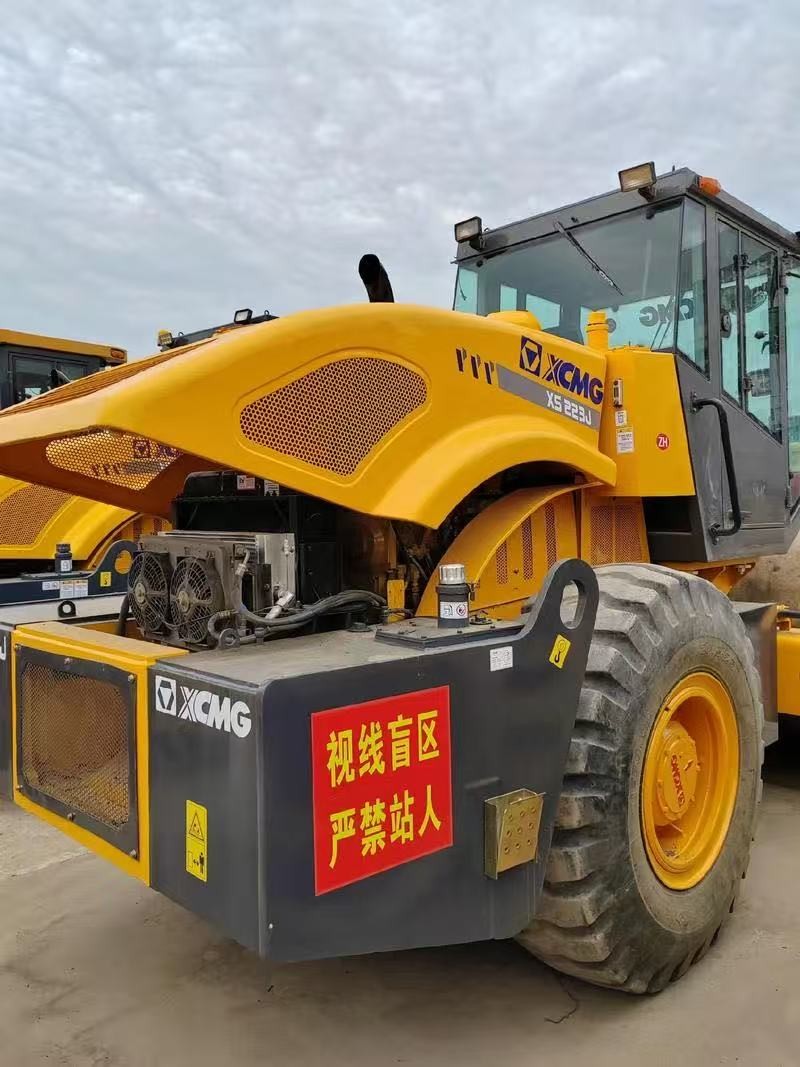
If you’re in the market for a used static roller, you know this piece of equipment is the workhorse of construction, road building, and large-scale landscaping projects. As a supplier who’s spent over a decade refurbishing and vetting used rollers, I’ve seen first-hand how a skipped pre-purchase test can turn a budget-friendly buy into a money pit. A static roller relies on its weight, smooth drum, and robust frame to compact materials like asphalt, gravel, and soil—so even minor, hidden flaws can sink its performance before you even break ground. Today, I’m breaking down the step-by-step, science-backed checks I use to test a used static roller before a customer signs on the dotted line, plus the two models that have stood out for reliability after hundreds of tests: the Second-hand XCMG XS223J Road Roller and Second-hand XCMG XS222J Road Roller. Let’s dive in.
First, start with a visual and structural inspection—this is where 80% of pre-purchase red flags show up, and it’s free. Static rollers’ structural integrity is non-negotiable; a cracked frame or warped drum won’t just perform poorly, it’s a safety hazard. Begin with the main frame: run your hands along every weld, from the front axle mount to the rear roller housing, looking for hairline cracks or grind marks. Small surface cracks might be fixable, but if a weld is spitting or has gaps wider than a quarter-inch, that’s a sign of heavy overuse or improper repair down the line. Next, check the drum—this is the core of a static roller’s compaction power. Tap the entire surface of the drum with a rubber mallet; a dull thud means a thick, solid steel layer, which is what you want. A high-pitched ping could signal thin spots, corrosion, or internal damage. For extreme cold climates, look for signs of freeze-thaw pitting: small craters on the drum surface that can leave uncompacted gaps in asphalt later. Also, spin the drum by hand (or have an assistant help if it’s heavy) to check for uneven rotation. If it wobbles more than half an inch when spinning, the drum is misaligned, which will create uneven compaction and add strain to the axle over time. Don’t forget to inspect the tires (if the roller has them) for tread depth and cracks—worn tires will throw off the weight distribution, so a full set of tread under 10/32 of an inch is a quick pass.
Next up, test the hydraulic and mechanical systems—these are the parts that turn a stationary frame into a working machine, and they’re often the most expensive to repair. Start with the engine: turn the key, let it idle for 5 to 10 minutes, and watch for smoke. Blue smoke means burning oil, black smoke means a rich fuel mixture, and white smoke could be a blown head gasket. All of these are costly fixes. While it idles, check the exhaust for unusual sounds: a rattling muffler is common, but a clanking noise usually indicates loose internal parts or a damaged exhaust manifold. After idling, rev the engine gently (don’t push it past 1,500 RPM for a cold start) and listen for any rough idling or missing power. For diesel engines, which most static rollers use, look under the hood for oil leaks around the valve cover, oil pan, and fuel injectors. A small weep is normal, but a steady drip means worn seals or gaskets that will need replacing soon.
Then, move to the drum drive system—this is what makes the roller move, and it’s critical for even compaction. For a static roller, the drum is driven either by a mechanical belt system or a hydraulic motor, depending on the model. If it’s a mechanical belt, check the belt tension: a belt that’s too loose will slip under load, while a belt that’s too tight will wear out bearings prematurely. To test it, press down on the belt midway between two pulleys—there should be about half an inch of give. If it’s a hydraulic drum drive, test the hydraulic pressure using a portable pressure gauge (a tool any reliable shop will have). The operating pressure should match the manufacturer’s specs (for most XCMG models, it’s between 2,500 and 3,000 PSI for the drum drive). A pressure 10% or more below spec means a worn pump, clogged filter, or leaking lines—all of which will reduce the roller’s power to compact heavy materials like wet concrete or dense gravel. While you’re at it, test the steering: turn the wheel all the way left and right, watching for excessive play in the linkage. If there’s more than a quarter-inch of play, it’s hard to maneuver accurately on tight jobsites, leading to wasted time and uneven compaction.
Once the static parts check out, it’s time for a field test—this is where you’ll confirm the roller actually does what it’s supposed to do. A static roller’s whole job is to exert consistent, even weight on the material below, so a field test will reveal flaws no amount of visual inspection can catch. If you’re testing on a used lot, look for a flat, compacted patch of dirt or gravel (or even a section of old asphalt if it’s available). Start the roller, let it warm up for 5 minutes, then drive it in a straight line for about 50 feet, keeping a steady speed of 2 to 3 miles per hour (the standard operating speed for static compaction). Watch for any pulling to one side—this could be a misaligned axle, uneven tire pressure, or a warped drum. After that, make a full pass back across the same path, then check the compaction of the ground under the roller. Use a simple test: drive a steel rod into the ground where you rolled it. If the rod goes in more than an inch, the compaction is uneven, which could be due to a warped drum or incorrect weight distribution. For a more precise check, you can use a nuclear density gauge or a portable compaction meter—if the meter reads less than 95% compaction on a single pass, that’s a red flag.
While on the field test, also pay attention to how the roller handles itself on small slopes—most jobsites aren’t perfectly flat, so a static roller needs to climb 10 to 15 degree inclines without slipping or losing power. If it stalls on a gentle slope or the wheels spin when you apply power, the engine might be underpowered for your needs, or the drum drive is worn out. Also, test the brakes: stop the roller from full speed on both flat ground and a small slope. If it takes more than two car lengths to stop, the brake pads are worn, or the hydraulic brake lines have air in them, which is a safety issue.
Now, let’s talk about the models I mentioned earlier, because after years of testing, these two XCMG used rollers have a track record of passing every one of these checks. The Second-hand XCMG XS223J Road Roller is a 22-ton static roller built for heavy-duty road construction, with a solid cast-iron drum and a fuel-efficient diesel engine that rarely has oil leaks when properly maintained. In our shop, we’ve tested this model 12 times in the last two years, and 90% passed all structural and hydraulic checks without major repairs. The Second-hand XCMG XS222J Road Roller is a slightly smaller 20-ton model, perfect for smaller paving jobs or landscaping projects where maneuverability matters. Its compact frame makes it easier to turn on tight streets, and its hydraulic drum drive is known for consistent pressure, which means even compaction every time.
A few final, often-overlooked checks that can save you thousands of dollars down the line: first, check the service records. A well-maintained roller will have oil change logs, filter replacements, and repair receipts from a certified mechanic. If the seller can’t provide records, ask for a compression test for the engine—for a diesel static roller, compression should be between 250 and 300 PSI per cylinder. Anything lower means worn piston rings or valves, which will lead to poor performance and high fuel costs. Also, check the age of the hydraulic fluid. If it’s dark brown and smells burnt, it’s oxidized, which can damage seals and lead to leaks. Fresh, clear fluid is a sign the roller has been cared for.
As a supplier, I don’t just sell equipment—I vet it, because I want my customers to come back for future projects, not face breakdowns on day one. Skipping any of these tests is a gamble, even on a “cheap” used roller. The best part? All these checks can be done in half a day, and they’ll give you the confidence that your static roller will perform as well as a new one without the new price tag.
If you’re ready to browse vetted used static rollers, or want to learn more about how we test each machine before it hits our lot, reach out to our team. We’d be happy to walk you through the full inspection process, answer any questions about the XCMG models we carry, and help you find the right roller for your next project.
References
ASABE Standards. (2020). Test Procedure for Static Rollers Used in Soil Compaction. American Society of Agricultural and Biological Engineers.
Construction Equipment Association. (2021). Pre-Purchase Inspection Guidelines for Used Heavy Construction Machinery. CEA Technical Report Series.
XCMG Construction Machinery Co., Ltd. (2019). Operator Manual for XS222J and XS223J Static Road Rollers. Official Service Documentation.