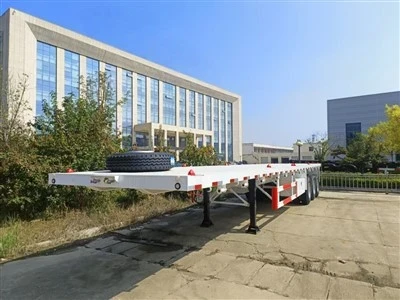
Operating a box tipper semi trailer is routine work on paper, but in practice it is a procedure that punishes complacency more harshly than almost any other trucking task. The moment the hydraulic cylinder begins to lift a loaded box, the entire weight of the cargo shifts toward the rear hinges, and the margin for error in terms of ground stability or alignment shrinks to almost nothing.
The first and most unforgiving rule is to tip only on ground that is both firm and level. Soft shoulders, recently backfilled trenches, or even a slight cross slope can turn a stable trailer into a rollover incident in seconds. Wet weather multiplies the risk because surfaces that looked solid in the morning can soften by afternoon. Equally important is keeping the tractor and trailer perfectly straight. Any angle between the cab and the box during the lift creates uneven pressure on the hinge pins and the trailer frame, a stress point that has been the root cause of countless cylinder failures and twisted chassis rails. Before any load goes on, a quick visual check of the hydraulic hoses for cracks and the fluid for signs of water contamination will prevent most of the mechanical failures that lead to dangerous mid lift malfunctions.

What is inside the box also dictates how cautiously the operator should proceed. Materials like wet sand, heavy clay, or frozen aggregate have a tendency to stick to the upper walls of the box instead of sliding out cleanly. When that happens, the center of gravity climbs even higher, and the trailer becomes vulnerable to even a mild gust of wind or a slight rut under one tire. On open sites, wind is an underrated hazard. A long box raised to full height acts like a sail, and a sudden crosswind can provide the final nudge toward a rollover. Overhead clearances are just as critical and just as easy to overlook. Power lines, tree limbs, and conveyor structures must be visually cleared before the first inch of lift. The distances are not negotiable and vary by jurisdiction, but the principle is universal: if there is any doubt about what is above the box, the lift should not start.
Finally, the most preventable tragedies happen when people are too close. A raised tipper body holds enormous potential energy, and hydraulic systems can fail without warning. A slow drift down is just as deadly as a sudden drop. No one should ever stand beside the trailer during the tipping cycle, and no one should ever place any part of their body between the chassis and a raised body unless a manufacturer supplied safety prop is locked firmly in place. That prop is the only thing standing between a routine maintenance check and a fatal crush injury. Operating a box tipper safely is not about memorizing a checklist as much as it is about respecting the physics of a raised load and knowing which corners simply cannot be cut.